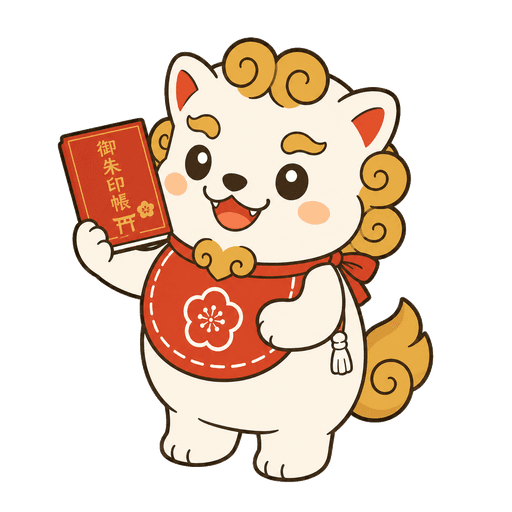
Every goshuin you receive in Japan falls into one of two styles: jikagaki, written by hand right in front of you, or kakioki, a design pre-written on a separate sheet of paper that you take home and attach yourself. Neither style is more "real" than the other — both are a genuine record of your visit — but knowing the difference helps you understand what you're being handed, and why a shrine or temple might only be able to offer one option on a given day.
What is Jikagaki (Handwritten)?
Jikagaki is the classic image most people picture when they think of goshuin: a priest or shrine attendant opens your goshuincho (stamp book) to a blank page and brushes the calligraphy directly onto it while you wait, followed by one or more red vermilion seal stamps. Because a real person is writing it in that exact moment, no two jikagaki are ever quite identical, even from the same shrine on the same day — the brushstrokes, the ink, and the placement all carry a small human variation that makes each one a one-of-a-kind keepsake. The tradeoff is availability: jikagaki requires someone trained in the calligraphy to be present and free to write, so on a very busy day, during a festival, or if the regular calligrapher happens to be away, a shrine or temple may not be able to offer it at all.
What is Kakioki (Pre-written / Paper)?
Kakioki takes the opposite approach: the goshuin is written in advance onto a loose sheet of paper, and you receive that sheet to bring home and add to your own book. Because the writing is already done, kakioki sheets can be handed out quickly, which makes them especially common at popular sites, during busy seasons, or at locations without a calligrapher on hand every day. Some shrines and temples also reserve their most elaborate designs — intricate cut-paper art, embroidery, multi-color illustrations — for kakioki only, since that kind of detailed work simply is not possible to produce on the spot with a brush. Paper-cut designs in particular have become a category of their own, and our guide to kirie goshuin covers what they are and how to keep one from tearing.
Which One Should You Get?
- Jikagaki: one-of-a-kind, brushed by hand while you watch, but not always available.
- Kakioki: faster to receive, available even without a calligrapher present, and sometimes the only way to get an elaborate design.
- Some shrines and temples offer only one style, or switch between them depending on the day, so you may not always get a choice.
There is no wrong choice between the two — both mark a genuine visit and carry the same meaning, whether the ink is still drying in front of you or was brushed the day before. Many collectors end up with a mix of both in their goshuincho over time, and that is completely normal.
How to Read the Calligraphy
Goshuin calligraphy can look like a beautiful blur of ink to a first-time visitor, but most follow a similar layout you will start to recognize. Toward the center, in the largest characters, you will usually find the name of the shrine's enshrined deity or the temple's principal Buddhist image. In the upper right, smaller characters often read hōhai (奉拝), meaning roughly "I have humbly worshipped," followed by the date of your visit. The shrine or temple's name typically appears toward the left or lower portion of the page, and the whole composition is finished with one or more red vermilion seal stamps unique to that site. Exact layouts vary from place to place, but once you know to look for these elements, the calligraphy starts to read less like abstract art and more like a small, structured record of your visit.
How to Store Paper Goshuin
If you receive a kakioki sheet, keep it flat and protected until you can deal with it properly — a clear plastic file or folder made for documents works well for carrying it home without creases. Once home, most collectors attach the sheet into their goshuincho using a thin layer of glue stick applied at the corners or edges, which holds the paper in place without wrinkling it or letting it slide around. Press the corners down gently and check that the sheet sits flat before closing the book, and compare the sheet's size against your goshuincho's pages first, since some kakioki are cut slightly larger than a standard book and may need to be folded in at the edge. If you would rather not glue it in at all, a clear sleeve or document folder is a perfectly fine way to keep it safe on its own.
Whether you end up with a page of brushed ink or a carefully preserved paper sheet, both are worth exactly the same as a record of having visited. Learning to spot the difference — and knowing how to look after a kakioki once you get one — is one of those small pieces of knowledge that makes collecting goshuin in Japan a little more rewarding.